

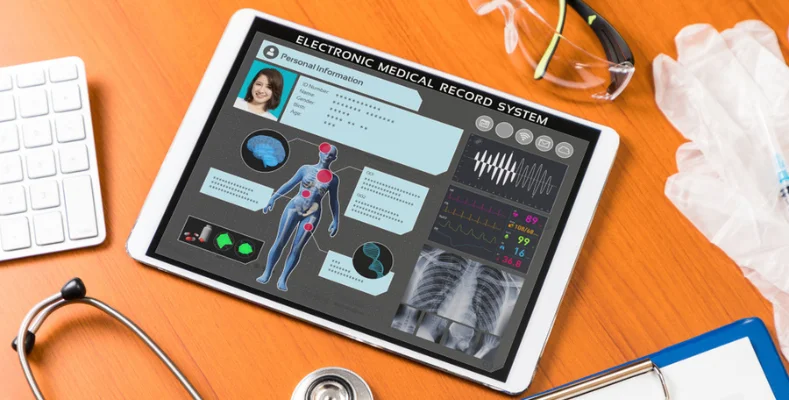
According to data published by the Office of the National Coordinator for Health Information Technology (ONC), 96 percent of non-federal acute care hospitals operate with certified electronic health records. The transition from paper charts to digital systems accelerated following the 2009 HITECH Act, which provided financial incentives for medical facilities to digitize their files. Understanding the 10 Advantages of Electronic Health Record (EHR) systems requires examining how these platforms change daily operations for physicians, nurses, medical billers, and coders. The benefits of electronic health records range from immediate data retrieval to strict compliance with federal privacy laws. Medical practices rely on EHR software to manage patient histories, process billing codes, and schedule appointments.
What are the advantages of electronic health records?
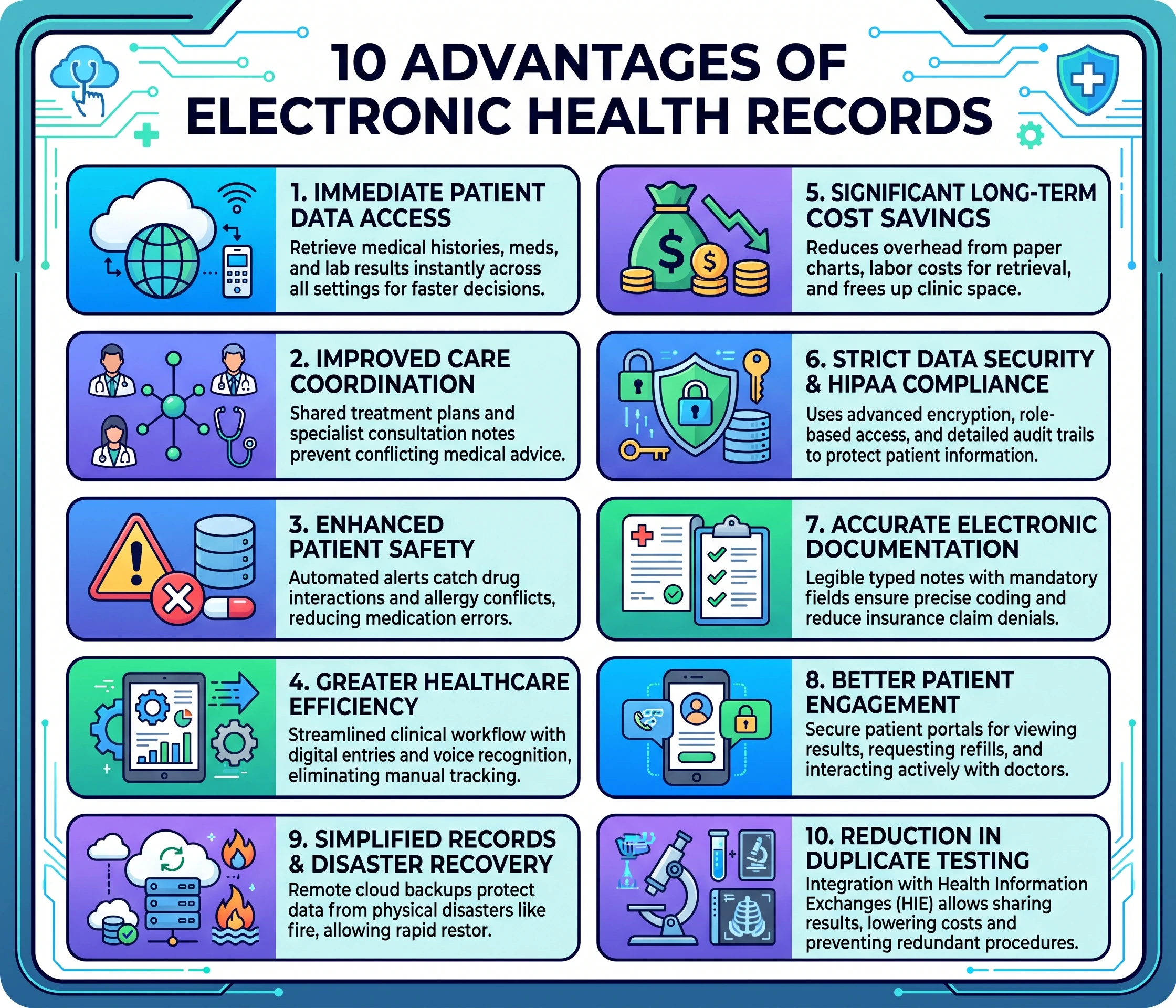
1. Immediate patient data access across care settings
Why are electronic health records important? The primary function of an EHR software system is rapid data storage and retrieval. Paper charts limit information to a single physical location. If a patient visits an urgent care clinic on a weekend, the attending physician cannot read the paper files stored at the patient’s primary care office. Digital health records solve this geographic limitation. Authorized healthcare providers retrieve medical histories, active medication lists, and previous lab results instantly through secure networks. This patient data access speeds up triage protocols. Emergency department doctors read past surgical notes upon the patient’s arrival. They make accurate clinical decisions based on documented medical history rather than relying on the patient’s memory during a medical crisis.
2. Improved care coordination among specialists
Patients managing complex or chronic diseases often require treatment from multiple medical professionals. A diabetic patient might schedule visits with a primary care physician, an endocrinologist, and a podiatrist. When these distinct providers operate on a shared EHR system, they view the exact same treatment plan. How does EHR improve patient care in these scenarios? Health information sharing prevents conflicting medical advice and overlapping treatments. One of the main advantages of EHR for healthcare providers is the ability to read consultation notes directly from other specialists on the care team. The endocrinologist reviews the primary care doctor’s recent lab orders before prescribing new insulin dosages. This prevents isolated treatment and ensures all doctors understand the patient’s current medical status.
3. Enhanced patient safety through automated alerts
How do electronic health records improve patient safety? Clinical decision support tools evaluate new prescriptions against a patient’s existing health data. These systems generate warning alerts when a physician attempts to prescribe a medication that conflicts with an active prescription. The Agency for Healthcare Research and Quality (AHRQ) reports that electronic prescribing systems significantly reduce medication errors. The software also cross-references prescriptions against documented allergies. If a patient has a documented penicillin allergy, the EHR system blocks the provider from electronically sending a prescription for amoxicillin to the pharmacy. The software removes human memory from the equation. It relies on database matching to catch dangerous drug interactions before the nursing staff administers the medication.
4. Greater healthcare efficiency and clinical workflow
How do EHRs improve healthcare efficiency? Physical charts require administrative staff to pull files, organize paperwork, and physically hand folders to the medical assistant. The benefits of using electronic health records include the complete elimination of this manual tracking process. Medical assistants enter vital signs, weight, and chief complaints directly into a tablet in the exam room. Physicians use digital templates to document the physical encounter quickly. Some providers use voice recognition software connected directly to the electronic patient records. Following the exam, the system routes the electronic documentation straight to the billing department. This clinical workflow allows medical practices to process patient visits faster without hiring additional administrative staff.
5. Significant long-term cost savings
What are the cost benefits of electronic health records? Purchasing and implementing an EHR platform requires upfront capital investment for software licenses and hardware. Once the system becomes operational, the benefits of adopting EHR include a measured reduction in overhead expenses. Clinics stop purchasing thousands of paper charts, specialized shelving units, and color-coded labels. The physical space previously dedicated to records management converts into revenue-generating examination rooms. A 2020 study published in the American Journal of Managed Care indicated that electronic systems reduce the labor costs associated with chart retrieval and medical transcription. Over a five-year period, these administrative cost savings typically offset the initial implementation fees. EHR integration also reduces the money spent on physical paper, printer ink, and commercial shredding services.
6. Strict data security and HIPAA compliance
What are the security benefits of electronic health records? The Health Insurance Portability and Accountability Act (HIPAA) sets the legal requirement for protecting patient health information. Paper records remain vulnerable to physical theft, unauthorized copying, and misplacement. Modern digital systems offer security protocols that physical paper cannot match. A HIPAA-compliant EHR uses 256-bit Advanced Encryption Standard (AES) data encryption for files in transit and at rest. System administrators assign role-based access. A medical coder can view the diagnostic data required for billing, but the system restricts them from viewing detailed psychiatric notes. The software also maintains an immutable audit trail. Security officers track exactly which employee opened a specific file, the exact time they opened it, and the duration of their access.
7. Accurate electronic documentation for medical billers
Students of medical billing and coding learn early in their training that clean claims require precise documentation. Physicians previously documented visits using handwritten notes. Illegible handwriting leads to inaccurate coding, which causes rejected insurance claims. The benefits of EHR in medical practices include mandatory data fields. The software requires the physician to select specific diagnoses and procedures before they can sign and close the clinical note. Coders read clearly typed text and use integrated search tools to select the correct ICD-10 and CPT codes. Medical billers rely on this accurate electronic documentation to submit claims to Medicare and private insurers. This accuracy accelerates the revenue cycle and decreases the rate of insurance claim denials due to missing information.
8. Better patient engagement via digital health portals
What are the benefits of EHR for patients? The Centers for Medicare and Medicaid Services (CMS) actively encourages medical facilities to provide patients with direct access to their health data through Promoting Interoperability programs. EHR systems include secure patient portals. Patients log into these web applications or mobile apps to review laboratory results, read visit summaries, request prescription refills, and send secure messages to their doctors. The benefits of EHR systems center heavily on this transparency. When individuals easily track their blood pressure readings or thyroid levels over time, they participate actively in their treatment plans. Patient engagement increases when communication with the clinic does not require waiting on hold during a phone call.
9. Simplified records management and disaster recovery
Fires, floods, and severe weather events can permanently destroy a physical medical archive. When paper files burn or suffer water damage, the patient history disappears entirely. Cloud-based EHR platforms solve this physical vulnerability. The software backs up encrypted data to remote servers multiple times a day. If a local hospital loses power or suffers hardware damage, the remote data remains completely safe. IT professionals can restore the software to new computers and resume operations rapidly. This disaster recovery capability satisfies federal regulations for contingency planning. It ensures continuous patient care during localized emergencies. Simplified records management also means clinics no longer hire commercial moving companies to transport physical boxes of files when relocating their offices.
10. Reduction in duplicate testing and diagnostic errors
What are the benefits of EHR for healthcare providers? Patients frequently undergo redundant blood panels or imaging studies simply because a new doctor cannot locate their previous test results. The benefits of EHR in hospitals include integration with Health Information Exchanges (HIE). These exchanges allow distinct hospital networks to share diagnostic data securely across different software vendors. If a patient receives an MRI at an independent outpatient imaging center, the hospital orthopedic surgeon views that exact scan digitally. Avoiding duplicate testing lowers out-of-pocket costs for the patient. It also reduces unnecessary spending for insurance companies and prevents the patient from enduring redundant, sometimes painful, medical procedures.
Evaluating the clinical and financial outcomes
The advantages of using electronic health records extend beyond single clinics. Public health organizations aggregate anonymized data from these systems to track disease outbreaks and monitor population health metrics. During seasonal influenza spikes, local health departments analyze diagnosis codes to allocate vaccines effectively. This macro-level health information sharing relies entirely on the standardized data captured during individual patient visits.
For healthcare administration, the financial benefits of implementing electronic health records become evident during the auditing process. Medicare and private insurance companies routinely audit medical practices to verify that billed services match the clinical documentation. Electronic records provide organized, legible, and time-stamped proof of service. Auditors review the electronic files efficiently, which reduces the disruption to the clinic’s daily operations.
Medical residents and students learn to navigate complex patient histories using the exact software interfaces they will encounter in professional practice. The structured formats teach new providers how to evaluate biological systems systematically. They learn to document clinical findings according to strict industry standards.
Understanding the 10 Advantages of Electronic Health Record (EHR) systems clarifies why the medical industry transitioned away from paper charts. The shift to digital documentation removed physical barriers to data access. It provided medical billers with the legible text required to assign accurate codes. It introduced automated safety checks that protect patients from prescription errors. The federal government mandates specific privacy protocols for digital data. Software vendors build encryption and access controls into their platforms to meet these legal requirements. From the administrative front desk to the surgical operating room, digital systems dictate how modern medical facilities operate. The financial investment required to install these systems yields returns through lower administrative overhead, fewer rejected insurance claims, and precise clinical accuracy.
Pharmaceuticals Online Australia
Today, while I was at work, my cousin stole my iPad and tested to see if it can survive a thirty foot drop, just so she can be a youtube sensation. My apple ipad is now destroyed and she has 83 views. I know this is totally off topic but I had to share it with someone!