
- 8017 Labana Ct, Canton Township, MI 48187
- +1 (734) 418 2537
- info@a2zbillings.com

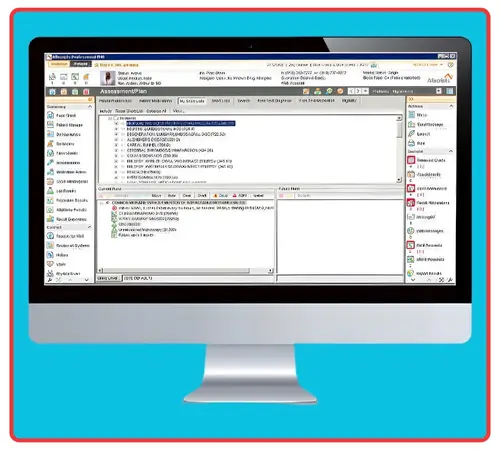
A2Z Billings operates the Practice Management and EHR sides of Allscripts together, so registration, documentation, and the charge that comes out of a visit stay lined up instead of drifting apart. We work inside the build your practice already has.
Ready to enhance efficiency and profitability within your Allscripts environment? Let’s design a billing strategy that works for your organization.
Allscripts sells Practice Management and EHR as one build, but most practices end up running them as two habits. Practice Management handles registration, scheduling, and the charge and claim cycle. Professional EHR or TouchWorks handles documentation, orders, and e-prescribing. The charge that lands in PM is only as accurate as what got recorded on the clinical side, which means the two modules either work as one system or they quietly work against each other.
Revenue usually leaks at the seam between them. A documentation template that doesn’t map cleanly to the right CPT code, an encounter that never gets closed because a provider moved to the next patient, a charge sitting in the review queue over a weekend, a coding pattern nobody checked against a payer’s current requirements. None of this shows up as one dramatic problem. It shows up as a charge lag that creeps from a day to a week, a clean claim rate that slides a few points, an A/R bucket that gets a little older every month.
We don’t rebuild your Allscripts configuration to fix this. We log into the charge review, coding, and denial queues your staff already has and work them daily, the way the system was set up to be worked in the first place.
Allscripts, Veradigm, or Altera:
Allscripts changed its corporate name to Veradigm in 2022, and in January 2023 it sold its hospital and health system business, including Sunrise and Paragon, to a group that now operates as Altera Digital Health. The ambulatory side, Professional EHR, TouchWorks, and Practice Management, kept running under the workflows most practices still call Allscripts day to day. We work across every naming version of the same core platform.
Twelve parts of the PM and EHR workflow, worked from the same queues your staff already uses.
Insurance and demographics are checked at the point of booking so eligibility problems surface before the visit, not after.
We review how EHR templates translate into PM charges so the most common visit types code correctly on the first pass.
Every closed encounter is checked against the current fee schedule and released on a set daily window.
Claims are checked against payer-specific edits before they leave the queue, not after a rejection comes back.
Denials are worked inside the PM denial worklist and routed to coding or documentation depending on the actual cause.
Appeal letters go out with the supporting clinical documentation attached and reference the specific payer policy in question. Billings combines deep Allscripts expertise with proven revenue cycle strategies to drive measurable results.
Real-time eligibility checks run through the payer connections already built into your PM instance.
Provider enrollment and CAQH updates are tracked so a lapsed credential doesn’t stall a claim later.
ERA files post automatically where a payer supports it; paper EOBs are posted by hand within a set turnaround.
Aged claims are worked by payer and by age bucket, not left sitting in one shared queue.
Monthly reconciliation between PM charges, EHR encounters, and bank deposits catches drift before it becomes a pattern.
Front-desk and clinical staff get short walkthroughs on the specific PM and EHR screens that affect billing.
Good Allscripts billing isn't a monthly report. It's a daily rhythm across both modules.
A pediatric practice on Allscripts Professional EHR had a charge lag averaging six days, mostly because closed encounters sat unreleased over weekends. We moved charge review to a daily morning pass, including Saturdays for Friday encounters, and the lag dropped to under 24 hours within the first billing cycle. No template or configuration change was needed. The release queue was already there.
Most practices use a fraction of what's licensed. Here's where we spend time.
Our team checks each appointment for a locked note, a diagnosis code, and the correct billing type before a claim is created. Missing pieces get flagged back to the clinician the same day rather than sitting until the claim is rejected.
Appointment type, insurance, and demographics are captured at booking against the PM registration screen the front desk already uses.
Benefits are checked ahead of the visit. Anything needing prior authorization is flagged before the appointment, not during check-in.
Providers document in Professional EHR or TouchWorks using templates mapped to the codes the visit actually needs.
Closed encounters are checked against documentation and the fee schedule before charges move to the claim queue.
Claims are built from PM charge data and checked against payer-specific edits before submission.
Clean claims go out through the clearinghouse connection already built into PM, with rejections routed back the same day.
ERA files post automatically where supported; paper EOBs are posted within a set turnaround window.
Denials are worked by cause, recorded, resubmitted, or escalated to appeal depending on the payer's response.
Patient responsibility is calculated from posted insurance payments, not estimated ahead of adjudication.
Claims are worked by age bucket and payer, with anything past 60 days reviewed individually.
Clean claim rate, days in A/R, and denial rate are reported monthly against the prior period.
These are the ranges we manage toward. Your baseline depends on payer mix and specialty.
First-pass clean claims
Charge lag, most weeks
Average days in A/R
A/R kept under 90 days
Good Allscripts billing isn't a monthly report. It's a daily rhythm across both modules.
Allscripts Professional EHR and Practice Management serve independent and mid-size practices across several specialties. Coding and payer rules differ enough between them that we keep separate playbooks instead of running one process across every account.
Each specialty brings its own billing texture - E/M-heavy visit coding in primary care, diagnostics and device codes in cardiology, global periods in orthopedics, time-based codes and parity rules in behavioral health. We configure edits, worklists and reporting in your system around your code mix, not a generic template. Larger organizations on TouchWorks are welcome to talk with us too - the revenue cycle principles carry over even where the screens differ.
No. We log into the Practice Management and EHR modules you already have configured. There's no migration and no parallel system to maintain.
Allscripts changed its corporate name to Veradigm in 2022 and later sold its hospital business, which became Altera Digital Health. The ambulatory Practice Management and EHR products practices use day to day kept the workflows most people still call Allscripts.
We work with Professional EHR, TouchWorks EHR, and Practice Management, along with PayerPath for claims and eligibility.
Usually not. We review how existing templates map to charges and suggest changes only where they're causing coding errors, not as a full rebuild.
Most practices are fully transitioned within two to three weeks, including a review of current A/R and open claims before we take anything over.
Yes. Some practices keep registration in-house and hand us charge review through payment posting. Others hand us the full cycle.
We inventory open claims and aged A/R in the first two weeks and work them alongside new charges, instead of starting fresh and leaving old claims behind.
Yes. Monthly reporting covers clean claim rate, days in A/R, denial rate, and charge lag, pulled directly from PM data.