

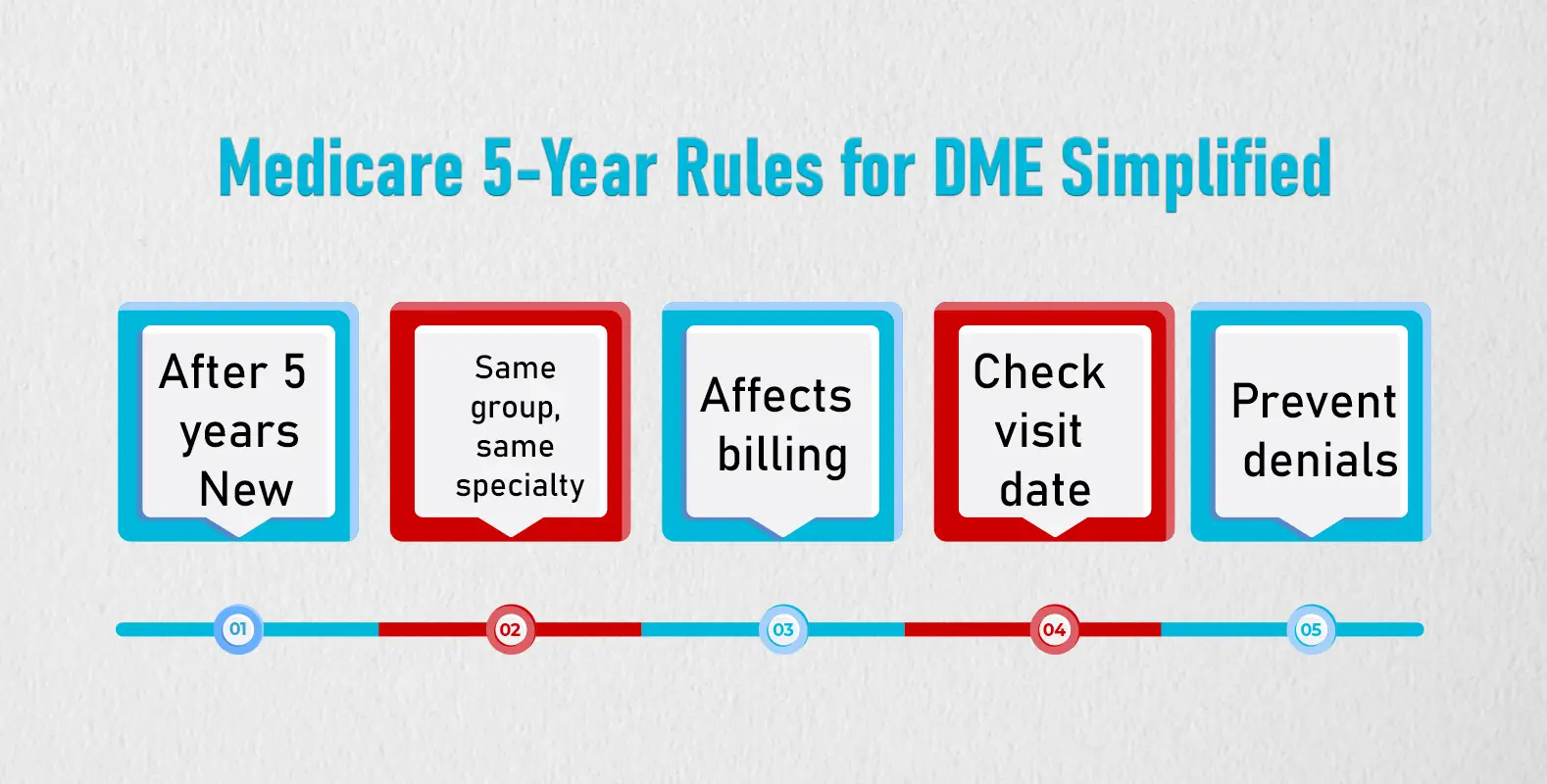
When it comes to Medicare billing, the rules can feel like a maze — especially when durable medical equipment (DME) is involved. At A2Z Billings, we’ve seen how one misunderstood policy can delay payments or create compliance issues. One of the most common questions providers ask us is about Medicare’s 5-year replacement rule for DME — what it means, when replacements are allowed, and what’s actually covered.
In short, the 5-year mark isn’t set in stone — it’s flexible when backed by solid documentation and medical need.
What Is the 5-Year Rule for Medicare DME?
The 5-year rule is Medicare’s way of setting a “reasonable life span” for most durable medical equipment. In short, Medicare assumes that most DME items should last at least five years from the date they’re first delivered to the patient. That means:- Medicare usually won’t pay for a new item until the old one has hit the 5-year mark.
- The clock starts when the equipment is delivered — not when it’s prescribed.
- During that time, repairs and maintenance are covered, but full replacement usually isn’t.
How Often Does Medicare Replace DME?
The simple answer is: every five years — unless there’s a good reason to replace it sooner. Here’s how Medicare looks at different scenarios:| Situation | Eligible for Early Replacement? |
| Equipment lost or stolen | Yes, with documentation (like a police or insurance report) |
| Damaged beyond repair (fire, flood, accident) | Yes, if proof is provided |
| Patient’s medical needs have changed | Yes, with a new prescription |
| Equipment worn out from normal use | Not until after 5 years |
| Switching suppliers or locations | No, unless medically necessary |
Medicare DME Replacement Guidelines
Medicare is looking at three main components when it comes to DME replacement: medical necessity, proper documentation, and supplier discretion.Medical Necessity:
Your provider must indicate that you still need the equipment or that your condition justifies a different piece of equipment.Documentation:
Documentation must accompany the claim for proper delivery, with the order from a legitimate medical provider, and validation. If the equipment is reported stolen or destroyed, then documentation must include a police report or insurance report.Accredited Supplier:
Suppliers must be enrolled with Medicare and have the proper accreditation to bill for DMEPOS (Durable medical equipment, prosthetics, orthotics, and supplies). When all three things are established, you are generally ok for reimbursement.Medicare Repair and Replacement of DME
Not every piece of equipment lasts the full five years — especially items used daily like wheelchairs, CPAP machines, or oxygen tanks. Medicare knows this, which is why repairs are often covered when it’s cheaper to fix than replace.Repairs:
Medicare Part B covers the labor and parts needed to fix medically necessary DME.Replacement:
- Covered if the equipment:
- Can’t be repaired cost-effectively
- Was lost, stolen, or destroyed
- Is no longer suitable due to a change in the patient’s condition
Five Criteria for Medicare’s Definition of DME
To qualify for coverage, an item must meet all five of Medicare’s official DME criteria: Durable: Can withstand repeated use. Medical Purpose: Used to treat or manage a health condition. Not Useful Without a Medical Need: The item is specifically for people with a medical condition. Used at Home: Designed for home use, not hospital-only equipment. Long-Term Use: Expected to last at least three years. If a device doesn’t fit this definition, Medicare won’t cover it — even if it seems helpful to the patient.List of Durable Medical Equipment Covered by Medicare
Here are some of the most common types of DME that Medicare Part B covers when prescribed for home use:- Wheelchairs (manual or power)
- Walkers, crutches, and canes
- Oxygen supplies and equipment
- CPAP and BiPAP machines
- Nebulizers and inhalation accessories
- Hospital beds and specialized mattresses
- Blood glucose meters and test strips
- Patient lifts
- Suction pumps
- Infusion pumps and feeding equipment
List of Durable Medical Equipment Covered by Medicaid
DME Medicaid coverage varies from state to state, although most allows coverage based on Medicare guidelines. Typical DME covered by Medicaid includes:- Wheelchairs and scooters
- Orthotic and prosthetic devices
- Oxygen and respiratory equipment
- Home hospital beds
- Diabetic care supplies
- Safety equipment for bathing or toileting (in some states)
What DME Is Not Covered by Medicare
Medicare has a very limited definition for what it considers to be medical necessity. Most items will not be covered in the following categories:- Disposal Items (i.e gloves, catheters)
- Comfort or Domicile (evil purifier, humidifier, recliner)
- Exercise Equipment (i.e treadmills, weights, bikes)
- Domicile Modification (i.e. ramps, grab bars, lifts)
- Items for Personal Comfort (i.e. heating pads, foot massager)
Medicare 5-Year Replacement Rule Exceptions and Policy Updates
While the Medicare 5-year rule sets a standard replacement timeline, there are clear Medicare 5-year replacement rule exceptions that allow earlier coverage. These include loss, theft, irreparable damage, or a documented change in medical condition. Providers should also understand that DME treatment guidelines are updated regularly, typically through CMS transmittals, LCDs, and policy updates issued several times per year. Asking how often are DME treatment guidelines updated? is critical, because outdated rules can quickly lead to denials. Staying aligned with the most recent CMS guidance ensures replacement claims meet current medical necessity and documentation standards.Medicare Durable Medical Equipment Fee Schedule
Every year, CMS updates its DME Fee Schedule, which lists how much Medicare pays for each covered device. The rate depends on:- The type of equipment
- The patient’s location
- Competitive bidding outcomes
DMEPOS Competitive Bidding and Medicare Provider Participation Rules
The DMEPOS competitive bidding program directly impacts how much Medicare reimburses for certain equipment in designated areas. Suppliers must bid to provide DME at set rates, and claims outside approved contracts may be denied. Additionally, Medicare participating provider rules require suppliers to be enrolled, accredited, and compliant with CMS billing standards to receive reimbursement. Providers should note that Medicare replacement plans (Medicare Advantage) may apply different billing rules, and billing rules for Medicare replacement plans for chiropractic services or other specialties can vary significantly. Always verify plan-specific requirements before submitting replacement claims.Medicare Replacement Plans, State-Specific Rules, and Insurance Clarifications
Medicare replacement plans—also known as Medicare Advantage—are offered by private insurers and may follow rules that differ from Original Medicare. A common question is: is Golden Rule Insurance a Medicare replacement? Golden Rule is not a Medicare replacement plan; it primarily offers short-term and supplemental coverage. Additionally, some providers ask about Medicare 5-year replacement rule California—while Medicare rules are federal, California suppliers must also follow state licensing and competitive bidding requirements. Always confirm whether replacement requests fall under Original Medicare or a Medicare Advantage plan before billing.When Early DME Replacement Is Covered
Early replacement is allowed when:- The equipment is lost, stolen, or destroyed.
- It’s damaged beyond repair.
- The patient’s medical condition changes.
- The 5-year useful lifetime has expired.
FAQs: Medicare DME 5-Year Rule
No, you’ll still need a new doctor’s order confirming that you need the equipment again.
If it can’t be repaired, Medicare will pay for a replacement once proper documentation is submitted.
Only if your medical condition changes and your doctor prescribes it.
Yes, typically you’ll pay 20% of the approved amount after meeting the Part B deductible.
A prescription, proof of medical need, and — if applicable — police or insurance reports.
You can request new equipment if you still meet medical necessity requirements.
No, only Medicare-enrolled and accredited suppliers can bill Medicare.
Yes, reasonable repairs and servicing are covered when the equipment remains medically necessary.