

Table of Contents
This blog is about ICD-10 coding for psoriasis. It talks about the L40 category. This category has subtypes like plaque psoriasis, guttate psoriasis and pustular psoriasis. Doctors and coders need to write down information. They have to choose the codes and follow the rules for billing. If they do all this they will get paid the amount. The blog also talks about the problems that people face when coding for psoriasis. It gives some tips to help people code more accurately.
Psoriasis is a skin condition that people have to deal with for a time. So it is really important to diagnose it and use the right codes for it. The ICD-10 coding system helps us do this by putting all the types of psoriasis into one category, which is L40. This makes it easier to keep track of everything and get paid correctly. The people who do the coding and billing need to understand these codes really well. If they do not they might not get paid for the work they do. This blog is going to talk about the codes for psoriasis, what they mean for patients and some tips for billing that can help reduce mistakes and support better care for patients.
Understanding Psoriasis
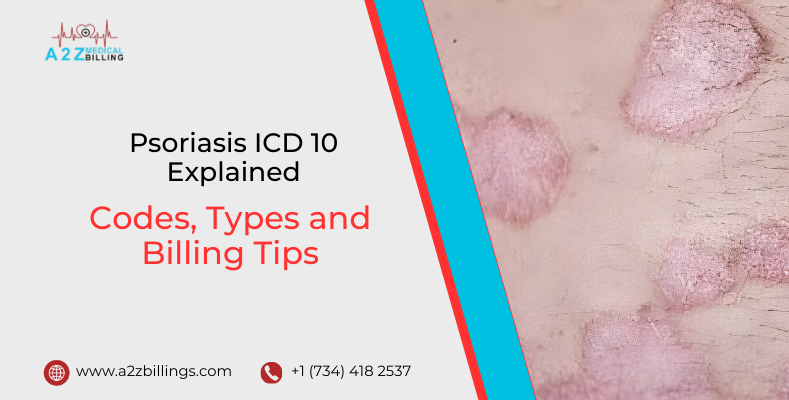
Psoriasis is a long-term skin problem that makes skin cells grow fast. This results in thick scaly patches on the skin. These patches can look red, swollen and have silver scales. They often cause discomfort, itching and sometimes pain. The condition can be different in severity and appearance. So getting a diagnosis and classification is very important in treating patients.
Role of ICD-10 in Medical Coding
The International Classification of Diseases Tenth Revision (ICD-10) is a system used worldwide to code and classify diseases and health conditions. For psoriasis ICD-10 helps doctors document the type and severity of psoriasis. This is crucial for planning treatment and billing.
Why Coding Matters?
Accurate ICD-10 coding is important for several reasons. It ensures that patients get the reimbursement for their treatment. It also reduces the chances of claim denials. Moreover it helps doctors make decisions about patient care. Accurate coding clearly explains a patient’s psoriasis condition to both doctors and insurance companies. This clear communication helps in providing treatment and coverage for psoriasis patients. Accurate ICD-10 coding for psoriasis supports decision-making and enhances communication between providers and payers by clearly defining the patient’s psoriasis condition.
Understanding the ICD-10 Category for Psoriasis
Overview of L40 Category
Psoriasis falls under the L40 category in the coding system. This category has codes for different types of psoriasis. Each code in the L40 category is for a kind of psoriasis. This helps in keeping records.
Importance of Specific Coding
It is crucial to use the code for the type of psoriasis being treated. Using the L40 code helps show the exact symptoms and condition of the patient. This specific coding is important, for proving that the treatment is medically necessary. It also helps in justifying the treatments given in severe or complicated cases of psoriasis.
Common Types of Psoriasis and Their ICD-10 Codes
Plaque Psoriasis
Plaque Psoriasis is the kind of psoriasis that people get the most. It is easy to recognize because it has patches that are raised and have silvery scales on them. These patches often show up on the scalp and on the elbows and knees. Lower back. When doctors write down information about Plaque Psoriasis they should make sure to include how bad it is and where it is and what symptoms the person has.
Pustular Psoriasis
Pustular Psoriasis is another kind of psoriasis. This kind is special because it has pustules that are surrounded by skin that is red and sore. It can happen in one spot or all over the body and sometimes people need to go to the doctor right away. Doctors need to be very clear about what symptoms the person has and where they’re when they write down the information.
Other Psoriasis
This is for the kinds of psoriasis that’re not common and do not fit into the other groups. Doctors use this when they are writing down information about a person’s psoriasis. It does not match any of the other kinds.
Guttate Psoriasis
Guttate Psoriasis is a kind of psoriasis that has spots that are shaped like drops. Sometimes this kind of psoriasis happens after the person has an infection like strep throat. It happens often in younger people and doctors should try to figure out what caused it when they write down the information.
Palmoplantar Pustulosis
Palmoplantar Pustulosis is a condition that affects the palms of the hands and the soles of the feet. It makes pustules and thick skin. It can make it hard for people to do their daily activities. Doctors should write down a lot of information about this condition.
Unspecified Psoriasis
Unspecified Psoriasis is what doctors call it when they are not sure what kind of psoriasis the person has. Sometimes doctors have to use this code. They should try not to use it too much because it can cause problems with getting money back for the doctor visit. Doctors should use this code when they do not have enough information to use a more specific code, for the kind of psoriasis the person has.
Importance of Accurate Documentation in Psoriasis Coding
Key Elements of Documentation
When we are talking about documentation we need to make sure it includes the type of psoriasis the patient has, how bad it is, which parts of the body are affected and how long it has been going on. This information is important because it helps the people who do the coding assign the ICD-10 code for psoriasis.
Linking Psoriasis with Comorbidities
Psoriasis is often linked with health problems like psoriatic arthritis. When this happens we need to use codes to get a complete picture of the patients health and make sure the billing is done correctly.
Avoiding Common Documentation Errors
If the documentation is not complete or is too vague it can cause problems with the coding. The claim might be denied or the reimbursement might be delayed. So doctors and other healthcare providers should make sure they are clear and specific when they write their notes about psoriasis and other health issues.
Billing Guidelines for Psoriasis ICD-10 Codes
Medical Necessity and Code Linking
To get paid for the work you do you need to make sure the ICD-10 codes you use show that the procedures you performed were really necessary for the patient’s care. For example if you are doing phototherapy or biologic therapy you need to have records that show how the diagnosis is connected to the treatment you are giving.
Use of Additional Codes and Modifiers
Sometimes you need to use codes or modifiers to show that the patient had problems or more than one condition. If you use these codes and modifiers correctly you can make sure your claims are accurate.
Insurance Requirements and Compliance
Different insurance companies have their rules for what documents and codes they need to see. You have to follow these rules so that your claims are not rejected and you get paid on time. Medical Necessity and Code Linking is important for this. You have to stay on top of what Medical Necessity and Code Linking requires and what the insurance companies need from you.
Challenges in Coding Psoriasis
Challenges With Medical Codes
One of the problems is using codes like L40.9 without being specific. This happens when there is no information and it can affect how much money is paid back.
Differentiating Between Kinds Of Psoriasis
Some kinds of psoriasis are very similar so it is hard to tell them. The people who do the coding need to look at the doctors notes carefully to figure out which kind it is.
Staying Current With Coding Changes
The codes and rules for ICD-10 are updated from time to time. It is very important to stay informed about these changes so that the coding’s accurate and follows the rules.
Interaction Between Doctors and Coders
When doctors and coders communicate well they can make sure that all the important medical details are included and turned into the codes.
Getting Training And Education
Regular training helps doctors and coders stay up to date with the coding standards, which makes things more accurate and efficient.
Using Technology To Help
Computer systems that handle records and have coding tools can help get all the details and suggest the right codes.
Checking For Errors Regularly
Doing checks of medical records and claims helps find mistakes, improve the process and reduce the chance of being denied.
Conclusion
Psoriasis coding under the system requires a good understanding of the L40 category and its subtypes. To do this properly healthcare providers need to make sure they document everything accurately and choose the codes. This is important for treating patients and getting paid back from insurance companies. If healthcare providers focus on writing down all the details, keep learning about the ICD-10 system and follow the rules for billing they can make sure their coding is accurate. This will also help them get financial results. Staying up to date with changes to the system is crucial for managing psoriasis coding and billing in the long run. Make An Appintment With A2Z
FAQs
Morbi condimentum congue dui, elementum maximus augue porttitor a. Quisque volutpat et dui at fringilla. Integer sed justo quis lacus sodales porta. Class aptent taciti sociosqu ad litora torquent per conubia nostra, per inceptos himenaeos. Aliquam molestie id nibh viverra fringilla. Nulla facilisi. Proin iaculis ornare lorem in imperdiet. Donec rutrum viverra dictum. Morbi et massa enim.
Accurate documentation is necessary so that we can assign the ICD-10 code. This helps prove that the treatment is necessary, reduces the number of claims that are denied and ensures that healthcare providers get paid back correctly for their services.
We can use L40.9 when we are not sure what type of psoriasis a patient has. However we should not use it often because it might result in lower payments from insurance companies and more scrutiny.
The types of psoriasis that are coded the often are plaque psoriasis, which is L40.0 guttate psoriasis, which is L40.4, pustular psoriasis, which is L40.1 and palmoplantar pustulosis, which is L40.3. Each of these requires information from the patient's clinical records.
We can improve the accuracy of psoriasis coding by documenting everything in detail, training regularly on updates, to the system communicating effectively between healthcare providers and coders and regularly checking medical records and claims.